
What Is Risk Management In Trading? Fundamentals for Beginners
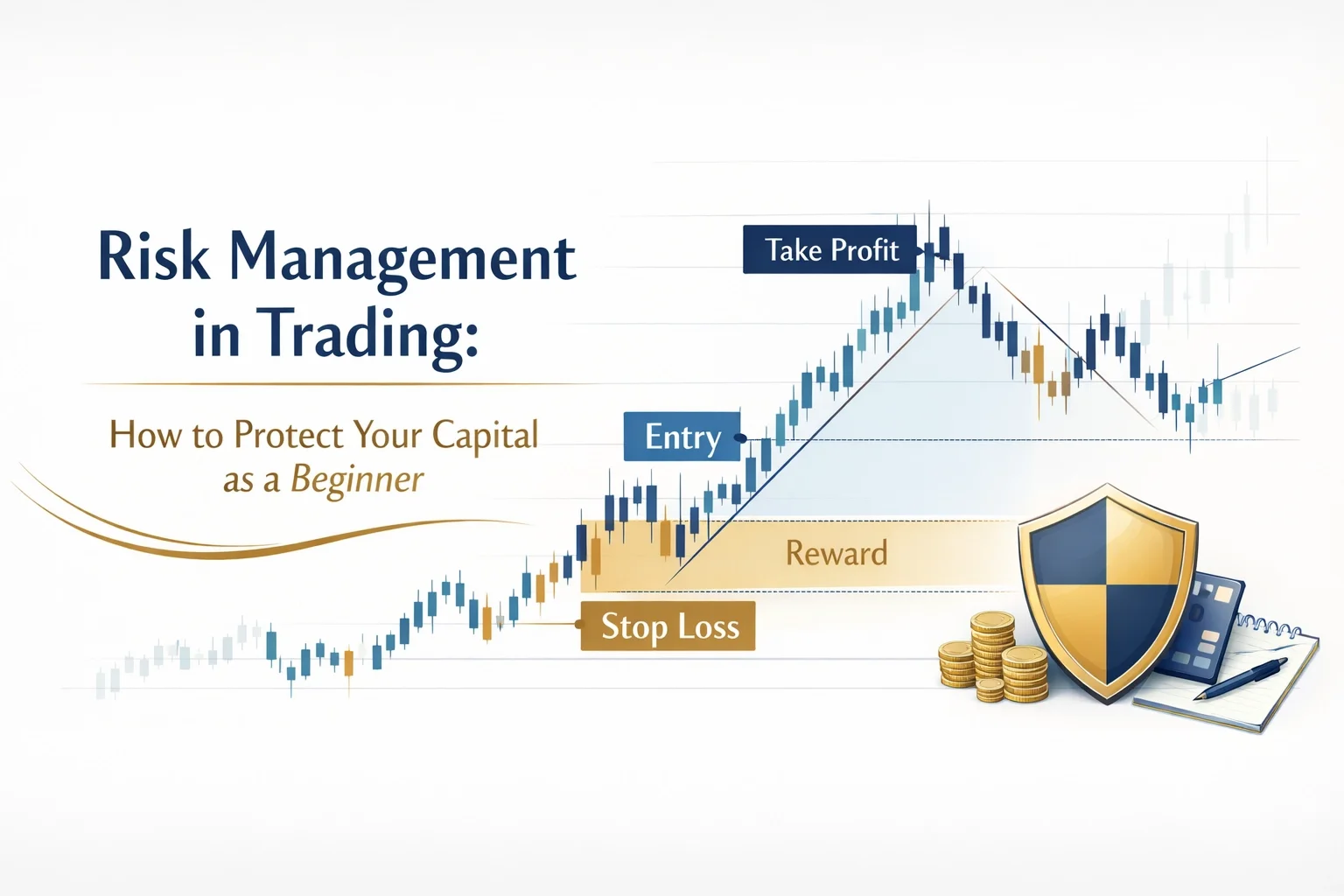
What is risk management in trading?
What is risk management in trading, and why does it matter before you ever focus on profit?
When most beginners start learning trading, their attention usually goes straight to entries, setups, and how much money a trade could make.
That is a normal starting point.
But risk management is what keeps a beginner in the market long enough to actually improve.
In this lesson, the goal is simple: understand what risk management is, why it matters, and how to start thinking about risk before a trade ever begins.
What is risk management in trading?
Risk management is the process of deciding how much you are willing to lose on a trade before you enter it. It is how traders protect their capital, stay consistent, and avoid losses that are too large to recover from easily.
Quick Answer: What Is Risk Management in Trading?
Risk management is deciding your risk before the trade begins.
It helps protect your capital.
It helps you stay in the market long enough to improve.
For beginners, it matters more than chasing bigger wins.
Why Risk Management Matters
Every trade carries risk.
That includes:
the possibility of being wrong
the cost of entering and exiting the trade
and the emotional pressure that comes from watching money move up and down
Risk management gives structure to that reality.
Instead of reacting in the moment, you define the risk first.
That changes the question from:
“How much can I make?”
to:
“How much am I willing to lose if this trade does not work?”
Inside the broader Foundations Hub, this lesson matters because it shifts a beginner from reacting emotionally to planning more intentionally.
The 1–2% Guideline (Beginner Framework)
A common beginner framework is risking around 1–2% of your account on a single trade.
For example, if your account is $1,000:
1% risk = $10
2% risk = $20
At first, those numbers can feel small.
That is the point.
Early on, the goal is not to grow an account quickly. The goal is to build habits that protect capital while you are still learning.
At Agorion, we often recommend starting even smaller.
Personally, I began by risking around 0.25% per trade. This type of risk strategy removes pressure and creates space to focus on execution.
The question is not: “How quickly can I make money?”
The question is: “How quickly can I learn a process I can execute with confidence?”
Risk is also personal.
It depends on things like:
your experience level
your emotional tolerance
your financial situation
and how calmly you can handle a loss
If one normal loss makes you anxious, reactive, or glued to the chart, the risk is already too high.
You don’t control the market. You control your risk.

Visual: A clean background image showing a 1:10 risk:reward ratio. A large gold block representing reward and a small navy block representing risk - each balancing on opposite sides of a scale. To give a visual of how your reward or profit should far outweigh your risk or loss in trades.
How to Practice Risk Management Safely
The best place to practice risk management is in paper trading.
That lets you build the habit before real money is involved.
A simple way to start is with the Long/Short Tool.
Before taking a trade, use the tool to map:
your entry
your stop
your target
That forces you to define risk before the trade begins.
You can also use a simple question to check whether your size is still reasonable:
If this trade loses, will I be able to take the next one calmly?
If the answer is no, your risk is probably too large.
Think of It Like This
Think of risk management like a seatbelt.
You do not use a seatbelt because you expect every drive to go wrong.
You use it because you understand that risk is part of the environment.
Trading works the same way.
Losses are part of the environment.
Risk management is what keeps one loss from becoming a much bigger problem.
Common Beginner Mistake: Risking Too Much Too Early
One of the most common beginner mistakes is risking too much on one trade because the setup feels especially strong.
That usually sounds like:
“This one looks perfect.”
“I’ll size up and make the loss back.”
“I’m sure this one will work.”
But beginner confidence can be misleading.
The better habit is consistency.
Define the risk first. Keep it small enough that one loss does not shake your process.
You don’t control the market. You control your risk.
Inside Foundations, these habits are taught step by step so you can build consistency before real money adds pressure.
Key Takeaways
Risk management is deciding how much you are willing to lose before entering a trade.
It protects capital and helps you stay in the market long enough to improve.
A common beginner framework is risking 1–2% of an account per trade.
If a loss makes you reactive, your risk is too high.
The goal is not to avoid all losses. The goal is to keep losses controlled.
Frequently Asked Questions
Is risk management really more important than strategy?
Yes. A strategy without risk management can still lead to major losses. Risk management is what helps protect your capital while you learn.
What percentage should beginners risk per trade?
Many beginners start with 1–2% or less per trade. The goal early on is to build consistency and emotional control, not to grow an account quickly.
What happens if I lose multiple trades in a row?
Losing streaks are part of trading. If your risk is managed well, a series of losses should still be survivable and should not damage the account too heavily.
How does leverage affect risk management?
Leverage increases both potential profit and potential loss. That is why position size and exposure matter when you decide how much risk to take.
Should I change my risk based on how confident I feel?
No. Confidence can be misleading, especially for beginners. Risk should stay structured and consistent, not tied to emotion.
Next Step
Now that you understand why risk management matters before profit, the next step is learning how margin works and how it connects back to exposure and control.
Read next: What Is Margin in Trading?
This Concept Is Part Of: The Agorion Method
This concept is part of the Agorion Method, specifically within the Foundations stage where traders learn how to protect capital before they focus on doing more with the market.
Risk management matters because it helps you stay in the game long enough for skill to develop.
Continue the Foundations Series
The Foundations Series was created to give women entering day trading a clear step-by-step path to understanding the markets without the noise or overwhelm common in traditional trading education.
Foundations Series Lesson Index
Lesson 1 - What is Leverage in Trading?
Lesson 2 - What is a Candlestick in Trading?
Lesson 3 - Understanding the Exponential Moving Average (EMA)
Lesson 4 - Using the Long/Short Tool to Plan Trades
Lesson 5 - What does a Trending Market Look Like?
Lesson 6 - What is Consolidation in Trading?
Lesson 7 - Spread Basics for Beginner Traders
Lesson 8 - Understanding Market Hours in Trading
Lesson 9 - Risk Management Fundamentals (← You are Here)
Lesson 10 - What is Margin in Trading? (←Read Next - Linked Above)
Lesson 11 - How These Trading Foundations Work Together
If you want to follow this process from the beginning, start with the Learning Path so you can see how the Agorion Method is designed to build skill step by step.
By Rachel Pennington
Rachel Pennington is the founder of The Agorion Collective, a structured trading education platform designed to educate and support women building real skill in the market. Her approach is rooted in clarity before complexity, teaching traders to understand price, manage risk, and develop their own process step-by-step.