
Day Trading for Women: A Beginner’s Guide to Getting Started

A woman at her desk learning to day trade on a laptop, with a simple candlestick chart displayed.
The world of trading can often feel like an exclusive club with its own language, high energy "bro" culture, and a million flashing screens. If you’ve ever looked at a chart and felt like you were staring at a foreign language you weren’t invited to learn, you’re not alone. Many women are curious about the markets but feel a sense of hesitation because the path forward seems cluttered and chaotic. If you’re searching for a clear way to approach day trading for women, this guide will walk you through exactly where to start and what actually matters.
Here’s the truth, Day trading is not complicated, it’s often just taught that way.
If you’re starting from zero, this guide connects directly to our Foundations Series, where we break down the core concepts of trading step-by-step so you can build real market understanding without jumping between disconnected strategies.
Why More Women Are Learning to Trade
In recent years, we’ve seen a massive shift in who is participating in the markets. Day trading for women isn't just a trend; it’s a response to a need for more control over our financial futures and our time.
Flexibility: Whether you are balancing a career, a family, or both, trading offers a way to engage with the world’s largest financial markets on your own terms.
Financial Independence: Understanding how to navigate price movement gives you a tool for wealth-building that doesn’t rely on a traditional 9-to-5 structure.
Accessibility: With modern technology, you don't need a Wall Street office or a broker on speed dial to participate. You just need a laptop, a connection, and most importantly, the right education.
Many women entering trading bring qualities like patience, discipline, and consistency. These are the exact traits that support long-term success in the markets. The hurdle isn't ability; it’s finding a starting point that doesn't feel like a gamble.
What Day Trading Actually Is
At its core, day trading is the act of buying and selling a financial instrument (like a currency pair or a futures contract) within the same day or other short period of time. We aren't "investing" in the sense of holding a stock for twenty years. Instead, we are looking at price movement on a smaller scale.
Think of it like being a specialized merchant. You buy an item when you believe the value is going to increase, and you sell it back to the market when it does. Or, you "sell" an item when you believe the value is going to decrease. You aren't gambling on a feeling; you are looking at charts to see where the market is likely to move next based on its current structure.
The Problem with Most Trading Education
Most beginners fail, but not for the reasons you might think. They don't fail because trading is inherently too hard for the average person.
Most beginners fail because they aren’t taught in the right order; not because they aren’t capable of learning how to trade.
Traditional education often throws you into the deep end, teaching you complex indicators and "secret" strategies before you even know how to read a basic chart. It’s like trying to do calculus before you’ve learned how to count to ten. You wouldn't expect to solve complex equations without understanding numbers first. In the same way, you shouldn't try to trade a live account until you understand the basic "numbers" of the market.
At The Agorion Collective, we follow a philosophy called Clarity Before Complexity. We believe in slowing down in the beginning so we can intentionally speed up later.
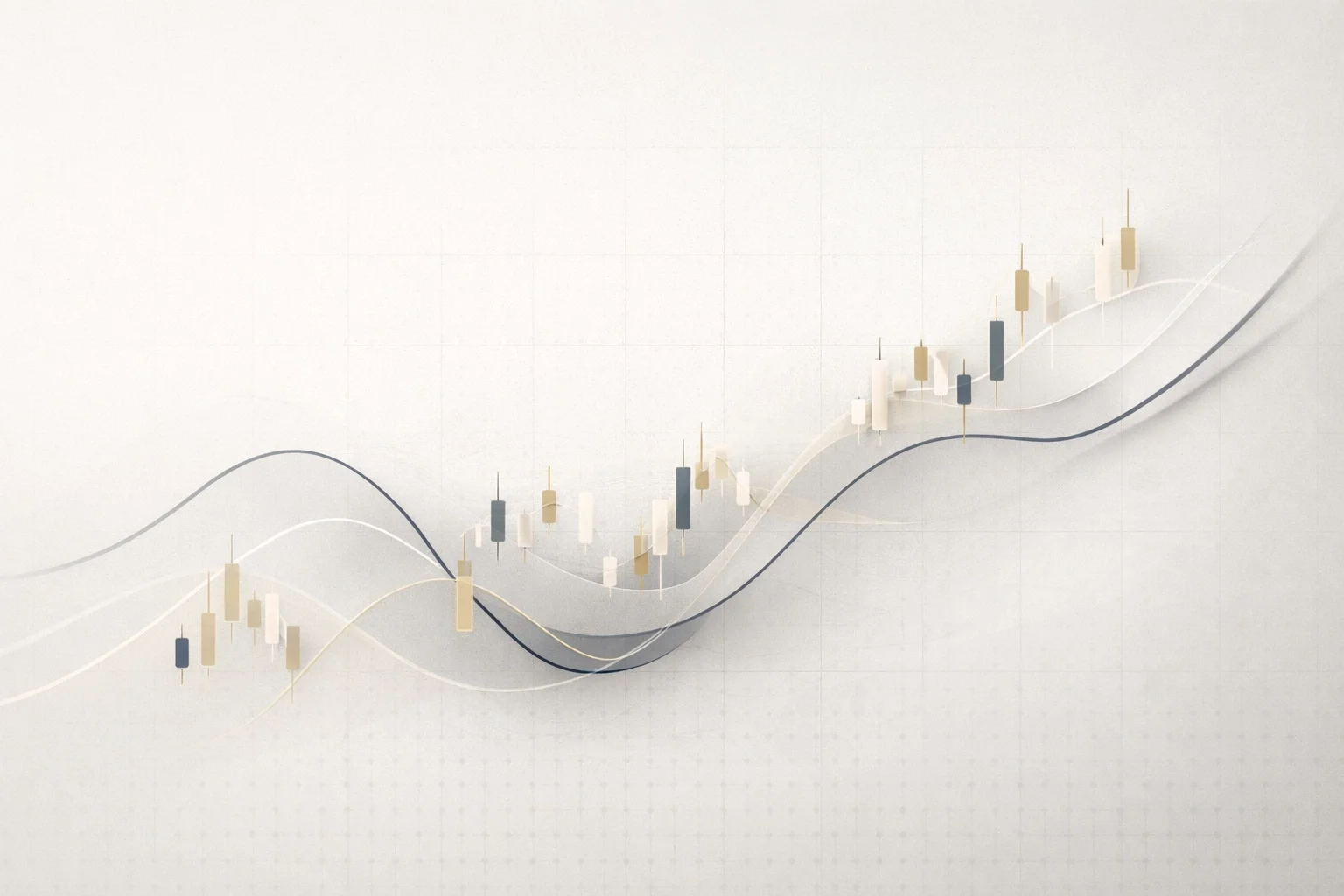
Visual: A simple candlestick chart entwined by EMA ribbons.
A Simple Path to Getting Started (The 5-Step Process)
If you’re wondering how to start day trading as a woman, here is the structured pathway we recommend.
Step 1: Understand the Basics
Before you look for a "win," you need to understand what you’re looking at. This starts with learning what is a candlestick and how to read a price chart. These are the building blocks of everything else.
Step 2: Learn Structure Before Strategy
Don't worry about winning strategies yet. First, learn how the market moves. Is it going up, down, or sideways? Understanding what a trending market looks like gives you the context you need to make informed decisions later.
Step 3: Protect Your Capital
This is the most important step. Before you think about making money, you must learn how not to lose it. Mastering risk management is what separates a professional trader from a gambler. We teach you how to calculate your position size so that no single trade can ever ruin your account.
Step 4: Practice Before Real Money
We always advocate for "paper trading" or demo trading first. This allows you to practice in real market conditions using "play money." It’s the flight simulator for traders. You build your confidence and your process without the emotional stress of financial risk.
Step 5: Learn in the Right Environment
Trading can be lonely, and the internet is full of noise. Finding a community of like-minded women who are all following the same structured path makes a world of difference. When you're finding the right trading community, look for one that prioritizes education and support over hype and signals.
Why Structure Matters More Than Strategy
Many new traders spend years "strategy hopping." They try one thing, lose a little money, and jump to the next "shiny object." This is a recipe for burnout.
We emphasize that clarity comes before complexity. If you’re starting from zero, the Foundations Series gives you a structured path through these exact steps so you’re not guessing what to learn next. You are building a layer of understanding that allows you to remain calm even when the market is volatile. Intentional structured learning leads to more sustainable progress in the long run.
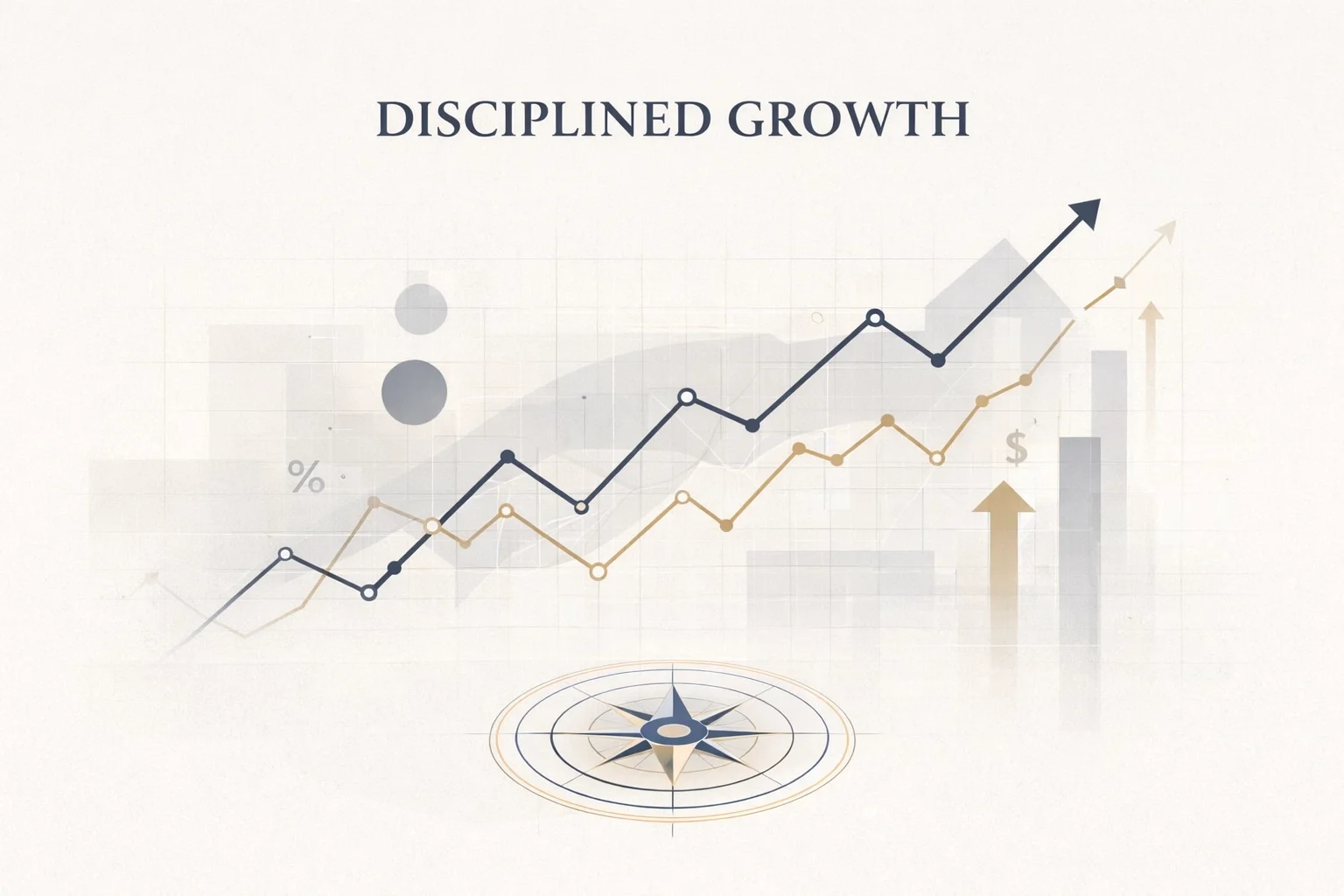
Visual: A trending line chart and compass depicting “Disciplined Growth”.
Common Beginner Mistakes
As you begin, watch out for these three common pitfalls that often cause traders to struggle with consistency:
Rushing to Live Trading: The desire for "fast money" often leads beginners to deposit real cash before they have a proven process.
Overtrading: Feeling like you need to be in a trade every minute of the day. Professional trading is actually very boring: it’s 90% waiting and 10% executing.
Skipping the Fundamentals: Trying to learn advanced price action before you understand basic concepts like spread or leverage.
What This Looks Like in Practice
Imagine waking up, opening your laptop, and spending 30 minutes reviewing a daily chart with a cup of coffee. You aren't stressed because you know exactly what you are looking for. You have a repeatable system. If the setup isn't there, you close the laptop and go about your day. If it is, you execute your plan with a pre-calculated risk.
This is the difference between reacting to the market and understanding it.
Summary:
Trading is a learnable skill. By focusing on structure before strategy and building your knowledge layer by layer, you can move from overwhelm to absolute clarity. Confidence doesn't come from a "lucky" trade; it comes from understanding the market's language.
Ready to Start with Structure?
If you're looking for a place to start trading that prioritizes clarity, structure, and a calm learning environment, we invite you to join The Atrium, our free women’s only Foundations tier community space. Trading can feel overwhelming at first, but it doesn’t have to be.
Start with a simple, step-by-step approach designed for beginners
Free access. No pressure. Start at your own pace.
Frequently Asked Questions
Can women be successful day traders?
Absolutely. In fact, many studies suggest that women are often more successful than men because they tend to be less impulsive, more risk-averse, and more willing to follow a set of rules strictly.
Do you need a lot of money to start trading?
No. While you need capital to trade live, you can start your education and practice on a demo account for free. When you are ready to go live, many markets (like micro-futures) allow you to start with a relatively small account.
Is day trading risky for beginners?
Any financial market involves risk. However, the risk is managed through education and discipline. The "risk" most people talk about usually comes from a lack of knowledge and poor risk management, not the market itself.
How long does it take to learn trading?
It depends on your consistency, but it’s better to think in terms of time under tension, not days or weeks. What matters is focused, intentional study - not how fast you try to move.
By following a structured path like the Agorion Foundations, you can build a solid base in roughly 10–20 hours of consistent, focused learning. Mastery takes time, but getting started doesn’t require thousands of hours; it requires clarity and direction.
Trading isn’t something you “finish.” It’s a skill you continue to refine over time, building experience and confidence with each step forward
What is the best way for women to learn day trading?
The best way is through a structured approach that focuses on fundamentals first, understanding how the market moves, how to manage risk, and how to build consistency over time.
Do I need to watch charts all day?
No! Many of our members trade specific "windows" of time or even check charts just once a day. A good system works around your life, not the other way around.
By Rachel Pennington
Rachel Pennington is the founder of The Agorion Collective, where she teaches women how to approach trading with structure, clarity, and confidence. Her work focuses on helping beginners move from overwhelm to understanding through a clear, step-by-step learning path.